Thursday, January 12, 2012

Natalee Holloway declared legally dead

An Alabama judge signed an order Thursday declaring Natalee Holloway legally dead, attorneys for her family said.
Probate Judge Alan King signed the order after an afternoon hearing in Jefferson County court in Birmingham.
Holloway was 18 when she was last seen in the early hours of May 30, 2005, leaving a nightclub on the Caribbean island of Aruba with Joran van der Sloot and two other men. No one was charged in her disappearance, and her body has never been found.
On Wednesday, van der Sloot -- who was detained twice in connection with Holloway's disappearance but never charged -- confessed in a Lima court to murdering a 21-year-old Peruvian woman five years after Holloway went missing.
Natalee's father, Dave Holloway, filed a petition to declare his daughter dead in June, six years after she went to the Caribbean island with 100 classmates to celebrate their graduation from Mountain Brook High School in suburban Birmingham.
He was present at Thursday's hearing, as was his ex-wife, Beth Holloway. She opposed the move to declare Natalee dead, pointing to a lack of evidence indicating her daughter is deceased and saying in a September statement that she "will always hope and pray for Natalee's safe return."
On Thursday, she told reporters while leaving the courtroom that she was upset by the judge's decision.
"Natalee's father wanted to see this through, and of course it makes me very sad," said Beth Holloway, who now works with groups and families of missing children.
Dave Holloway acknowledged Thursday that the ruling is "tough," though he said he's considered it a possibility ever since the FBI told him 10 days after his daughter went missing that they were approaching her case as a homicide.
"We've been dealing with this death for the last six and a half years," he told reporters Thursday. "Hopefully, this meeting today will (provide) some closure."
In a hearing in September, King ruled the petition could go forward, according to CNN affiliate WBRC.
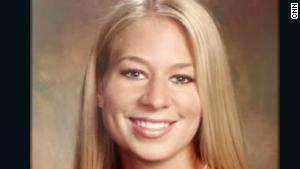
Yearbook photo of Natalee HollowayAt that time, King ruled that a notice of presumption of death must be published in a local newspaper for two successive weeks, followed by a 12-week time frame to submit any evidence the teen is still alive, WBRC said. Barring any such evidence, the judge would then be able to declare Natalee Holloway dead.

Dave Holloway explained that, barring his daughter miraculously being found alive, that a decision like the one issued Thursday had to be issued "eventually."
His attorney, Mark White, previously said that the order -- which acts as a death certificate -- will help resolve the estate of Natalee Holloway, who still has a small college fund in her name and is listed as a participant and beneficiary on her father's health insurance.
Now was the proper time to pursue this action, said Dave Holloway, given his desire to take "care of some needs" and van der Sloot's conviction earlier this week.
"I was in a situation where a lot of things came together, with the criminal element as well as having to take care of business," he said.
The 24-year-old Dutch national could be imprisoned for as many as 30 years when he is sentenced Friday, two days after he pleaded guilty to all the charges against him in the killing of a Peruvian woman in 2010.
Investigators believe van der Sloot killed Stephany Flores after she found something related to the Holloway case on van der Sloot's computer as she visited with him in his hotel room.
Van der Sloot also faces possible extradition to the United States. In June 2010, a federal grand jury in Alabama indicted him on charges of wire fraud and extortion after allegations surfaced that he tried to extort $250,000 from Holloway's mother. Van der Sloot offered to provide what turned out to be bogus information about the whereabouts of Natalee Holloway's remains in exchange for the money, according to the indictment.
He was allegedly given a total of $25,000, and authorities believe he used that money to travel to Peru and participate in a poker tournament, where he met Flores.
Peggy Sanford, a spokeswoman for the U.S. Attorney's office for north Alabama, said that there's no timetable as to when federal authorities will seek to bring van der Sloot to the United States for prosecution.
"We want Joran van der Sloot to face the charges here, and we are prepared to try him as soon as we can get him to the United States," Sanford said. "Right now, we don't know when that will be."

Khloe Kardashian, mom respond to paternity rumors

There’s a long-running joke in the Kardashian family that Khloe - with her taller stature and lighter hair - might be the milkman’s baby.
The reality star even played into the rumor when she bought a paternity test on a 2009 episode of “Keeping up with the Kardashians.”
But, as far as the famous family is concerned, the joke is over. Radar Online reports that Robert Kardashian’s second and third wives told tabloids that the late Kardashian patriarch was unsure if Khloe was his child.
“Khloe is not his kid - he told me that after we got married,” Kardashian’s ex-wife Jan Ashley reportedly told Star Magazine.
Kardashian matriarch Kris Jenner addressed the rumors on “Good Morning America” Thursday, saying, “I was there. … I gave birth. I know who the dad was. Everything is good.”
Citing the episode of “Keeping up” that addresses the speculation, Jenner said, “It’s the family joke because Khloe was blonde and not dark-haired. … Get a life.”
Khloe appeared to respond to the claims on Twitter Wednesday, writing, “The audacity you have to mention my father’s name like this! Should be ashamed of urself! I let a lot of things slide but this one is really low… YOU ARE DISGUSTING! (yes you know who YOU are)."

Tuesday, January 10, 2012

Wednesday, January 4, 2012

Accused L.A. Arsonist Recognized by State Department Agent

The German man who authorities have called "the most dangerous arsonist in L.A. history" was recognized on surveillance tape by a sharp-eyed State Department agent, officials said today.
An agent in the department's Diplomatic Security field office recognized accused arsonist Harry Burkhart, in the surveillance footage circulated by the Los Angeles Police Department as the son of a woman who was being extradited.
The agent, who was not being identified, contacted the LAPD, State Department spokeswoman Victoria Nuland told ABC News.
"Over the New Year's Eve weekend, that task force put out a video showing a person of interest exiting a parking lot and asked for the public's help," Nuland said.
The agent was familiar with Burkhart because of a "separate ongoing investigation about a German national that we've been having with the LAPD," she said. The tip led to Burkhart's arrest, Nuland said.
Burkhart, 24, will appear in court Wednesday to face charges that he allegedly set a series of 52 blazes in the Los Angeles area over the past four days.
Authorities said they were "very confident" in the arrest of Burkhart, who told police officers, "I hate America" as they placed him under arrest.
Burkhart, a German national, may have been motivated by his anger at U.S. immigration authorities that stemmed from a deportation hearing involving his mother, Dorothee, that took place in Los Angeles County about a week and a half ago, sources told ABC News.


Burkhart broke into in a tirade, spewing angry anti-American statements, during the hearing for his mother, before being escorted from the courtroom by U.S. Marshalls, officials told ABC News.
Officials said he shouted "F... the United States" during the Dec. 29 hearing, one day before he disappeared and the fires in Hollywood began.
According to a redacted criminal complaint that was unsealed today, Burkhart's mother was facing extradition because she pilfered rent security deposits and had skipped out on paying for a breast augmentation surgery.
Today, Burkhart's mother was in federal court again for a hearing, she is facing 19 counts of fraud in Germany. During her court appearance she reportedly appeared perplexed and asked the judge where her son was, even stating that he is mentally ill.
Burkhart was traced by his identifying ponytail and the Canadian license plates on his van.
Los Angeles Police Deputy Shervin Lalezary spotted a minivan Monday with British Columbia plates that matched the description of a vehicle seen at several of the vehicle and carport fires ignited around Hollywood and West Hollywood, beginning Dec. 30.
When Lalezary initiated a traffic stop, he discovered the van's driver, Burkhart, also resembled the person of interest seen in a videotape released by the multi-agency arson task force assigned to the case. Grainy security footage from a parking garage that was set on fire showed a man in a ponytail, too.
Police seized flammable materials that matched the materials used in the blazes during the search of the minivan, according to sources.
Initially identified by police as a person of interest, Burkhart soon became a prime suspect. He was detained and questioned and, after subsequent interviews with police, was arrested.
On Monday afternoon he was charged with one count of arson of an inhabited dwelling, with more charges expected as the investigation proceeds, Los Angeles Mayor Antonio Villaraigosa said.
Burkhart is currently being held on $250,000 bail.
The fires were mostly ignited around vehicles, and then spread to structures, eventually causing hundreds of thousands of dollars in damage. Since Burkhart's arrest on Monday, there have been no new fires set in the Los Angeles area.
Burkhart was uncooperative and was to be asked to sit for a polygraph as part of the investigation, sources said on Monday afternoon. Warrants for a search of the suspect's residence were in the process of being executed.

Starbucks And 11 Items That Will Cost More This Year

The new year can bring a fresh start for many people and, unfortunately, higher prices on a number of consumer goods.
Commodity prices increased around the world in 2011, leading to hikes in everything from food to gold. On Tuesday, Starbucks said it will raise prices by an average of about 1 percent in the Northeast and Sunbelt regions of the U.S., Reuters reported. The price increase is due to increased costs from coffee, milk and fuel. In New York City, prices for a 12-ounce "tall" brewed coffee and latte drinks will each rise 10 cents. Prices for several other drinks will also increase, a spokesperson for Starbucks told Reuters.
Natural disasters, shrinking supplies of various materials, and other events could lead to higher prices for other products.
Some increases will be expected, like ever-rising gas prices, while others, like a potential 25 percent hike on tap water, are more surprising, according to Dealnews.
1.
Domestic and International Airfare
Marshal Cohen, chief industry analyst with The NPD Group, said he has already experienced higher airfares in bookings for 2012. That's coupled with a slew of flights being dropped, he said.
"Many smaller markets are now having three daily flights cut to two or even one," he said. "That will drive fares up to those locations."
Travel to and within Europe will be hit especially hard. The European Union implemented a "green tax" to reduce emissions, levying a fee of about $15 per passenger, each way, for flights to the U.S. Fees on shorter flights within the European Union will be taxed slightly less, Dealnews reports.
Rick Seaney, CEO of Farecompare.com, agreed that domestic flights will be higher as airlines continue to reduce seat capacity and fuel remains stubbornly high.
However, there may be some price relief in international airfare because those tickets have already been quite high in the last 18 months and "demand has slipped a bit."
2.
New Digital Camera Models
Digital cameras with new technology, such as high-end digital SLRs, will have higher prices. But on existing models, the prices will decrease according to the natural maturation of electronics, Cohen said.
Smartphones have replaced budget friendly point-and-shoot cameras, so manufacturers and retailers are focusing more on higher-end digital SLRs, Dealnews reported.
3.
Hard Drives
Tragic flooding in Thailand in 2011, which has killed 780 people, has also led to a shortage of some electronics products, like hard drives.
Dealnews expects continued shortages throughout the first quarter of 2012, when experts predict that production will begin to catch up with demand.
4.
Desktop Computers
The consolidation of desktop features into monitor-integrated units, many with touchscreens, will drive desktop prices higher next year, according to Stephen Baker, vice president of industry analysis at The NPD Group. Dealnews said it expects average selling prices to increase roughly 30 percent on new desktops.
5.
Food for Home Preparation
Food prices will jump in 2012 as the costs to harvest, transport, and store food will increase, and those hikes will be passed to consumers, said Cohen.
Food costs rose 6 percent last year and will likely rise at least 2 percent more in 2012, Dealnews reported. Increases are likely to affect food eaten at home, rather than at restaurants. There, those costs are easier to absorb when combined with sales of liquor, according to Harry Balzer, chief industry analyst for The NPD Group.
6.
Mobile Device Data Plans
As carriers expand 4G services and move away from unlimited plans, data is set to become more expensive in 2012, according to Ross Rubin, executive director of Connected Intelligence at The NPD Group. This is a reversal of the usual trend, because data plans in the past have had a tendency to decline in price, Dealnews said.
7.
City-Enforced Fees
Dealnews said fees for everything from dog licenses to vehicle registration may increase as municipalities continue to try to plug holes in their budgets. Parking rates and infraction-related fines are also subject to increase. In Chicago, a non-registered dog can already incur a $500 fine. Parking fines in Portland are increasing 18 percent as the city faces a $16 billion deficit in its transportation budget.
8.
Water
Water is one of the simplest commodities in the world but it is becoming more precious, said Cohen. inclement weather around the world is creating greater shortages. Moving water to places that are lacking it will also drive this basic element to become more costly, he said.
Dealnews reports that water rates in the greater Chicago area will increase by as much as 25 percent next year, while the parched high desert Denver market is set to rise an additional 5.5 percent.
9.
Gas
Gas was already set to rise, but geopolitical issues in the Middle East are already set to exacerbate increasing gas prices.
On Tuesday, Iran's First Vice President Mohammad Reza Rahimi threatened to close the Strait of Hormuz, a small waterway that borders Iran, if other countries sanction his country's crude exports because of its nuclear ambitions. That could disrupt roughly a third of the world's tanker traffic and send oil prices skyrocketing, analysts say.
Iran holds the world's fourth-largest proven oil reserves and the world's second-largest natural gas reserves, according to the U.S. Energy Information Administration.
Next year may be another budget-breaking year at the pump, with prices once again topping $4 per gallon.
Since 2004, gas prices have risen an average of 93 cents a gallon between Christmas and the eventual peak the following year, and as much as $1.30 a gallon some years, according to Patrick DeHaan, senior petroleum analyst with GasBuddy.com. That could mean gas prices may come close to or higher than their levels last spring, when the Arab Spring and turmoil in Libya began.
10.
Gold
Gold is set to achieve its 11th consecutive year of growth, according to Dealnews. Analysts expect the precious metal to rise about 12 percent next year, a conservative estimate. The past decade has had a 17 percent annual growth rate.
11.
Shipping
As the U.S. Postal Service may increase rates and eliminate one-day delivery to fill a budget deficit, FedEx and UPS are also expected to increase small package rates by 4.9 percent.
"Shipping too is directly related to fuel and transport costs," Cohen said. The loss of revenue for shipping companies and the increased cost of shipping creates a recipe for higher shipping costs all along the route, he said.

Mom Reunites With Biological Child 77 Years Later

For most of her 100 years, Minka Disbrow tried to find out what became of the precious baby girl she gave up for adoption after being raped as a teen.
She hoped, but never imagined, she'd see her Betty Jane again.
The cruel act of violence bore in Disbrow an enduring love for the child. She kept a black and white photograph of the baby bundled in blankets and tucked inside a basket.
It was the last she saw of the girl — until the phone rang in her California apartment in 2006 with the voice of an Alabama man and a story she could have only dreamed.
Disbrow, the daughter of Dutch immigrants, weathered a harsh childhood milking cows on South Dakota dairy farms. Her stepfather thought high school was for city kids who had nothing else to do. She finished eighth grade in a country schoolhouse with just one teacher and worked long hours at the dairy.
On a summer day in 1928 while picnicking with girls from a sewing class, Disbrow and her friend Elizabeth were jumped by three men as they went for a walk in their long dresses.
Both were raped.
"We didn't know what to do. We didn't know what to say. So when we went back, nothing was said," Disbrow recalled.
Months passed. Her body began to change.
Disbrow, who had been told babies were brought by storks, didn't know what was happening.
Her mother and stepfather sent her to a Lutheran home for pregnant girls. At 17, she gave birth to a blond-haired baby with a deep dimple in her chin and named her Betty Jane.
In her heart, Disbrow longed to keep her. But her head and her mother told her she couldn't bring an infant back to the farm.
A pastor and his wife were looking to adopt a child. She hoped they could give Betty Jane the home she couldn't.
"I loved that baby so much. I wanted what was best," Disbrow said.
She never met them, or knew their names. But over the years, Disbrow wrote dozens of letters to the adoption agency to find out how her daughter was faring. The agency replied faithfully with updates until there was a change in management, and they eventually lost touch.
Disbrow's life went on. She married a fruit salesman who became a wartime pilot and drafting engineer and they had two children. She worked as a dressmaker, silk saleswoman and school cafeteria manager in cities spanning from Rhode Island to Minnesota and Northern California before moving to the seaside town of San Clemente an hour's drive north of San Diego.
Every year, she thought about Betty Jane on her May 22 birthday.
Five years ago, Disbrow prayed she might get the chance to see her.
"Lord, if you would just let me see her," Disbrow remembers praying. "I promise you I will never bother her."
On July 2, the phone rang.
It was a man from Alabama. He started asking Disbrow, then 94, about her background.
Worried about identity theft, Disbrow cut him off, and peppered him with questions.
Then, the man asked if she'd like to speak with Betty Jane.
Her name was now Ruth Lee. She had been raised by a Norwegian pastor and his wife and had gone on to marry and have six children including the Alabama man, a teacher and astronaut Mark Lee, a veteran of four space flights who has circled the world 517 times. She worked for nearly 20 years at Walmart — and especially enjoyed tending to the garden area.
Lee knew she was adopted her whole life, and grew up a happy child

Kangaroo Attack: 7-Year-Old Girl Barely Escapes With Her Life

A 7-year-old girl suffered cuts and bruises on her face, arms and back after she was attacked by a kangaroo while playing near a picnic area in New South Wales, Australia.
“I thought I was going to die,” she told Reuters. “Everything was gray, gray, gray.”
Makayla McEvoy was playing near a group of kangaroos when one charged at her, pinned her to the ground  and began to kick  her.
“It just jumped on her back and knocked her to the ground and started –  it was just jumping up and jumping up on top of her and scratching her,” Makayla’s mother, Emma McGovern, said.
Her step-father, Mitch McGovern, ran to save her from the attack.
“As I jumped over the top of Makayla to get rid of the kangaroo, all I could see was she was lying, sort of, face-down on the ground with her shirt. It was all ripped, and her back was cut,” he told Reuters.
“Honestly, I thought she was dead. She didn’t make any noise. She didn’t scream for help,” Emma  McGovern said.
Makayla was rushed to the hospital where her wounds were treated. She was released from the hospital but has cuts and scratches on her face, back and arms.
The animal that attacked Makayla was an Eastern gray kangaroo.
Overpopulation of large species kangaroos, such as Eastern grays, is a problem in Australia. This, along with urban development, has creatde situations in which kangaroos live in close proximity to humans.
“In my experience, they just want to be left alone,” said Adele Dodge, head keeper of the Australian Islands region at the Columbus Zoo and Aquarium in Columbus, Ohio. “They are fight or flight animals. If given the opportunity, they will flee. But if they feel threatened or cornered, it’s certainly within their capabilities to fight back.”
The average male Eastern gray kangaroo can grow up to weigh 145  pounds  and stand more than  6 1/2 feet tall. Females are typically smaller, and weigh around 70 pounds.
Despite Makayla’s traumatic experience, she still plans to pursue her dream of becoming a veterinary surgeon. “I love animals,” she said.

Man arrested in NYC firebombings

NEW YORK - A man who confessed to a string of New Year’s Day arson attacks at an Islamic cultural center and four other sites where he had personal grievances was arrested on a hate crime charge, police said.
Ray Lazier Lengend, 40, of Guyanese descent, hurled crude firebombs at the Islamic center in part because he was not allowed to use its bathrooms, a law enforcement official said.
He was tracked through a stolen car with Virginia license plates believed to be at the scene of at least two of the attacks Sunday evening. The attacks were on a convenience store, three homes, and the cultural center, police said.
He was arrested yesterday on charges including one count of arson as a hate crime, four counts of arson, and five counts of criminal possession of a weapon, they said.
Lengend, who lives in Queens, was taken to a hospital for a psychiatric examination last night. He remained in custody and could not be reached for comment.
Police spokesman Paul Browne said Lengend made statements implicating himself and had personal grievances with each targeted location.
The firebombs were tossed at the convenience store, two homes in Queens, a home in nearby Nassau County, and the Islamic center.
Authorities believe Lengend was kicked out of the convenience store on Dec. 27 for trying to steal a glass Starbucks Frappuccino bottle and milk.
Four of the five firebombs thrown at the various locations were made from glass Starbucks bottles, Police Commissioner Raymond Kelly said. The fifth was probably made from a beer bottle.
Witnesses reported the man made threats as he was escorted out of the store, Kelly said.
“When they were pushing him out of the store, he said words to the effect that, ‘We’re going to get even. We’re going to get back at you,’ ’’ Kelly said.
No one was injured in the attacks, which caused little or no damage at most of the sites.
The law enforcement official, who spoke on the condition of anonymity because the investigation was ongoing, said that Lengend bought five Frappuccinos and was given three for free the night of the attacks.

Chinese official arrested after 'poisonous cat stew plot'

A government official in south China has been arrested for murder, after he allegedly used a bowl of poisoned pork rib and cat meat stew to kill a local businessman. 


Huang Guang, a forestry official in the small town of Bajia, Guangdong province, invited Long Liyuan, a local tycoon, to lunch on December 23.
The two men had worked together since 2009, with Huang Guang helping Mr Long to buy tracts of woodland in the region and to get planning permission for construction projects.
In return, according to the local media, Mr Long had paid Mr Huang as much as 3.5 million yuan (£350,000) in bribes.
The Southern Metropolis newspaper said that Mr Huang had run up debts and had recently asked for more money from Mr Long, sending him his bank account details by text message at the end of October.
However, Mr Long was reported to have been unhappy with the corrupt official after a lucrative project stalled and, at one point, threatened to unmask him. 

On the day of his death, Mr Long had gone with Mr Huang and a third man, Huang Wen, to visit a new plot of forest that was for sale.
Afterwards, the three men ate together at their local restaurant: Bajia Hotpot. They ordered a pork rib and cat meat stew and, while it was being prepared, Mr Huang slipped away "to make a telephone call", according to Huang Wen.
The police believe it was at this point that Mr Huang slipped into the restaurant's kitchen and added Gelsemium Elegans, a highly poisonous flowering plant that grows in the area, to the bubbling pot. Gelsemium Elegans is notorious in the south of China as a means of committing suicide.
On Tuesday the restaurant declined to comment on how Mr Huang had managed to poison the stew, or why he would poison a meal he went on to eat.
"I only tasted a little and thought it was not right, not like the one we had eaten the previous time," said Huang Wen. "I have often eaten cat hotpot but this time it tasted bitter."
According to the Southern Metropolis Daily, Huang Wen even joked at the time that the stew must have been poisoned. Mr Huang, however, insisted that the bitterness was a sign that the stew was a "good tonic".
Mr Long eagerly devoured the larger part of the stew, one of his favourite dishes, but all three men fell ill shortly after the meal and were taken to hospital. Mr Long died 20 minutes after being admitted.
The local police announced Mr Huang's arrest on Monday.
"Huang, who was helping Long take a lease on a forest, had himself used funds provided by Long. This led to an economic dispute and gave Huang the idea to kill Long with poison," said a statement.

Wednesday, December 28, 2011

Steven Tyler Family Members Furious Over Singer's Engagement

Steven Tyler's big engagement news did NOT go over so well with several members of his family ... who are telling friends they simply don't like his new fiancee ...

Sources connected to the Tyler clan tell us ... several family members have clashed with Erin Brady for years ... and have told friends, "She's just not nice."

One source tells us, "She's just been mean to the family."

And to make matters worse -- we're told several family members have griped that they had no idea about Steven's proposal plan until AFTER he popped the question to 38-year-old Brady this weekend ... and they felt slighted by the omission.

Sources tell us ... the family members were hoping they could eventually repair the relationship with Erin, but now, they feel Steven has only widened the divide.

Multiple calls to Steven's rep have not been returned.

Rachel Uchitel I'M PREGNANT!!!

There's something growing inside of Rachel Uchitel ... and this time, it's not the guilt from sleeping with a married golfer.

Uchitel -- former Tiger Woods mistress numero uno -- has announced that she's preggo ... and by the looks of the photo, she's pretty convinced the baby belongs to her husband Matt Hahn.

TMZ broke the story ... Rachel and Matt secretly tied the knot back in October. The two have been living together in San Francisco ever since.

Uchitel tweeted the photos last night -- and wrote, "Expecting big things for 2012... Five down, Four months to go." By our math, the baby is due sometime around the end of April.

Congrats!

Cheetah the 'Tarzan' Chimp Dead at 80(ish)

Cheetah the chimpanzee -- who reportedly played Johnny Weissmuller's sidekick in the 1930s "Tarzan" films -- passed on to the great jungle in the sky last week after suffering kidney failure ... this according to the primate sanctuary that he called home.

The Suncoast Primate Sanctuary in Palm Harbor, Florida -- where Cheetah had been living since the 1960s -- made the announcement, saying, "It is with great sadness that the community has lost a dear friend and family member."

Cheetah was believed to be 80 years old.

Friday, December 23, 2011

Homs: Bloody winter in Syria's revolution capital

CNN) -- The Arab Spring has turned to bloody winter in Homs, the city that has suffered the most from Syrian President Bashar al-Assad's deadly nationwide crackdown on anti-government protesters.
Known as the capital of the revolution, Homs has seen the worst of the violence that has left an estimated 5,000 people dead since protests began in Syria in March.
Located in the agricultural heartland of central Syria, Homs has long been a transport and commercial hub of vital strategic importance.
A Syrian military tank takes position in a residential street in Homs, 160 kms northeast of Damascus, on August 30, 2011.
The road through Homs connects the capital, Damascus, in the south to Syria's largest city, Aleppo, in the north. Homs is home to one of two oil refineries in the country; preserving that oil supply is crucial to the Assad regime's ongoing efforts to crush the anti-government movement there.
Syria's third largest city and its citizens, known as "Homsies," hold a contradictory place in the Syrian national conscience, according to Chris Phillips, a Syria analyst for the Economist Intelligence Unit.
"Homsies are often the butt of jokes in Syria," said Phillips, "but they've actually got quite a large cultural and educational influence on the country."
The city of 1 million is one of Syria's most ethnically diverse. Traditionally a Sunni Muslim merchant town, a considerable number of Alawite Muslims, a Shia sect, have settled in Homs in the past 30 years, and there also is a small Christian population in the city.
Report: Human rights violations in Syria
Syrian escape routes filled with danger
Syrian army defectors speak out
UN: 5,000-plus Syrian civilians killed
"We live in a complex community, with many different sects and religions," a Homs opposition spokesman -- who uses the name Abu Rami to hide his real identity from security forces -- told CNN.
"Before the uprising, we were all living here as brothers and we didn't think there were differences between us," said Rami from central Homs, where scores have been killed in non-stop fighting between opposition and regime forces this month.
Homs is more warzone than city now, he says. Parts of the city are without electricity; in other parts, security forces shut off the electricity and telecommunications networks ahead of early morning raids to root out opposition members.
"If you're in a place where they cut off the power or the phones, you know you're in trouble," said Rami.
There is a shortage of everything from children's milk formula to oil for heating, and he says security forces are preventing medical aid from reaching dying citizens.
"Every day there are murders -- snipers on the roofs are shooting anything that moves, preventing the arrival of medical supplies and shooting at ambulances. It's a very hard situation," said Rami.
A 26-year-old born and raised in a middle class family in Homs, Rami left his medical studies at Al Baath University to help organize protests against al-Assad's government in March.
Nine months later, the city and its once-vibrant sidewalk cafe culture is in lockdown mode after fighting intensified there recently.
Defectors from the military have joined volunteers in forming the Free Syrian Army in Homs, and residents in some neighborhoods have organized into armed defense committees, according to a report from Human Rights Watch.
With at least 60 checkpoints set up in Homs and dozens of tanks now surrounding the city, the opposition fears al-Assad is plotting an attack that could rival the 1982 crackdown in Hama, when regime tanks and troops killed thousands of people and reduced parts of that city to rubble.
President al-Assad denies responsibility for the escalating violence in Syria, and distanced himself from his armed forces in a recent television interview.
If you're in a place where they cut off the power or the phones, you know you're in trouble
Abu Rami in Homs
"They are not my forces," al-Assad told ABC's Barbara Walters. "They are forces for the government. I don't own them. I'm president. I don't own the country. So they are not my forces."
The bloodshed has left city residents on edge. Public life is limited to about six hours each day from 9:00 a.m. to 3:00 p.m., says Rami -- shops close soon after that and people are rarely seen on the street.
Rami himself has been hiding in a friend's basement in the relatively calm Al Ghouta neighborhood for days, as he doesn't feel it is safe to return to his own home.
"I haven't seen my house or my parents in five days, but I've talked to them on the phone and I've told them not to worry, that I'm okay," he told CNN. "My neighborhood is surrounded by shabiha thugs and I'm afraid to be arrested or killed."
The "shabiha" pro-regime militia, reportedly working alongside government forces, has been blamed by the opposition for attempting to stoke sectarian tensions in Homs.
And while Homs has traditionally been a place of religious tolerance, Syria expert Phillips told CNN "there is a real sense now that that is changing and being manipulated by people on both sides" of the conflict.
"The older Sunni merchant class that feel the city is theirs rightfully are now turning on the Alawites, who they see as these recent migrants that don't actually belong in the city," said Phillips.
"Alawites live on the outskirts; they're not seen as really part of the old city. They don't fall within the old city boundaries, they're recent migrants and [some Sunnis] are not very happy with them."
While certain elements of the Sunni community would like to overthrow the Alawite al-Assad and retake what they see as their rightful place as leaders of Syria, Phillips says the Alawite community fears the prospect of persecution if the government falls.
"The regime is trying to persuade the Alawites that if they abandon the government, they will be wiped out in the dog-eat-dog aftermath," he said.
According to Phillips, those who have spent the last nine months protesting every day in Homs fear that "if they stop doing this, then they will be crushed."
Rami says he would like to stay in Homs if and when the uprising ends.
"I hope Homs will be okay," he said. "I hope in the future we'll stand together in Homs."
As the death count continues to rise and prospects for peace in the near future dims, Rami believes the war in Homs can only end one of two ways.
"Either we all die," he said, "or we get victory at the end."

Analysis: Bombings expose Iraq's deepening sectarian divisions

(CNN) -- Nature abhors a vacuum but terrorism relishes one. And Iraq appears to be offering new space for al Qaeda and other militant groups, as political rivalries and sectarian animosities deepen.
The coordinated bomb explosions across Baghdad Thursday -- which killed more than 60 people -- bear the hallmark of Islamic State of Iraq (ISI), which is closely associated with al Qaeda.
No other group in Iraq has shown itself capable of such synchronized suicide attacks. Some, but not all, of the bombings were in Shiite neighborhoods; frequently al Qaeda's targets appear indiscriminate as part of a strategy to sow fear and stir sectarian tensions.
The attacks come as Iraq's Shiite Prime Minister, Nouri al-Maliki, demands the surrender of Iraq's Sunni Vice-President, Tareq al Hashimi, on charges that he ordered bombings and assassinations.
Expert: Al Qaeda still big in Iraq
Bombs and politics at play in Iraq
Iraq's VP accused of terrorism
Hashimi has taken refuge in the northern Kurdish-administered part of Iraq, and the country's always-fragile tripartite balance now appears to be in grave danger -- with the restraining effect of a U.S. military presence gone.
Ramzy Mardini, of the Institute for the Study of War, believes the presence of U.S. troops helped stabilize Iraq's political discourse, and "their premature removal from the political space has altered the manner on which Iraq's actors interact."
But even before their departure, there were ominous signs, as two largely Sunni provinces declared their intent to become autonomous regions. Those moves appeared to have the support -- or at least sympathy -- of Vice-President Hashemi.
Al Qaeda in Iraq has shown before that one of its aims is to spark sectarian bloodshed between Iraq's Sunnis and Shiites.
Under the leadership of Abu Musab al-Zarqawi, it carried out a double bombing of one of Shiite Islam's most holy places -- the Askariya shrine in Samarra -- in February 2006.
The plan nearly worked: there were retaliatory attacks against Sunni mosques and for nearly two years Iraq was mired in sectarian bloodletting.
In words that may apply equally today, Iraq's national security adviser at the time, Mowaffak al-Rubaie, said: "The main aim of these terrorist groups is to drag Iraq into a civil war."
While political violence in Iraq is nowhere near its peak of 2006-07, it has never gone away.
ISI regrouped after the death of Zarqawi, and after losing support within the Sunni community because of its vicious attacks on civilians.
Iraqi officials speak of a "third generation" of al Qaeda in Iraq, with fewer foreign fighters and more battle-hardened Iraqi Sunnis.
Analysts say ISI has turned to bank raids and other forms of crime to finance its activities, and is targeting police patrols in areas where it is strong, largely north of Baghdad.
U.S. officials say that unlike al Qaeda under Zarqawi, the group no longer holds swathes of territory, but acts in smaller cells.
It is strongest in the city of Mosul, 260 miles north of Baghdad and one of Iraq's many sectarian faultlines.
The city is a base for ISI but rarely suffers from its violence. But it has shown it can operate across the country.
On one day in August, 13 people were killed and dozens injured in attacks blamed on ISI. Two bombs in Baghdad killed 18 people at the end of October.
U.S. officials expected ISI to step up its campaign on the heels of a U.S. withdrawal. The former spokesman for the U.S. military in Iraq, Major General Jeffrey Buchanan said: "It's likely they will try to harbor their resources for a significant series of attacks after the U.S. military withdrawal if for no other reason than to demonstrate their relevance."
He added that "since August al Qaeda has been working really hard to foment sectarian conflict," and warned that "if the Iraqi security forces are not able to put pressure on them, they could regenerate."
But when the U.S. military left Iraq, it took its intelligence-gathering with it -- making the job of Iraqi counter-terrorism units more challenging still.
"Without all the enablers we provide, there's no doubt there will be less capability than there is right now," Buchanan said a few weeks ago.
Shiite militias -- often supported by Iran -- have emerged to counter the threat of Sunni militancy.
And as Iraqi security forces have gone after Sunni militants, the balance of power has tipped toward these Shiite militias -- groups like Asaib ahl-Haq and Kata'ib Hezballah.
U.S. officials contend that Shiite groups sponsored by Iran were a greater danger than al Qaeda to the country's stability.
Despite his good relations with Iran, Prime Minister Maliki is well aware that its influence is a double-edged sword -- and is anxious that Iraq does not become a battleground between the Islamic republic and the Sunni monarchy in Saudi Arabia.
"We do not allow Iran to use us against others that Iran has problems with, and we do not allow others to use us against Iran," he said last week.
But Iraq has little control over its own borders, and a former U.S. military officer who served in Iraq told CNN last week that its security forces were still largely divided on sectarian lines.
The situation in neighboring Syria adds another dimension to the situation. Thousands of Sunnis took refuge there after the fall of Saddam Hussein, but if the regime of President Bashar al Assad falls, they may need to return home.
Maliki has already said that Assad's fall could set off a regional sectarian crisis -- one reason perhaps that his government has opposed Arab League sanctions against Syria.
And some Iraqi Shiites see a Saudi hand at work in Syria. For its part, Iran has all the more reason to reinforce its influence in Iraq should its long-time Arab ally in Damascus be ousted.
This regional volatility only adds fuel to an always combustible internal situation.
Last week, U.S. Defense Secretary Leon Panetta said after a visit to Baghdad: "The leadership of Iraq is committed to a strong and sovereign and independent Iraq and for that reason I am confident they are going to succeed."
Al Qaeda and its enemies at the other end of the religious spectrum are doing their best to prove him wrong.

Readied To Donate Organs, 21-Year-Old Emerges From Coma

Sam Schmid, an Arizona college student believed to be brain dead and poised to be an organ donor, miraculously recovered just hours before doctors were considering taking him off life support.
Schmid, a junior and business major at the University of Arizona, was critically wounded in an Oct. 19 five-car accident in Tucson.
The 21-year-old's brain injuries were so severe that the local hospital could not treat him. He was airlifted to the Barrow Neurological Institute at St. Joseph's Medical Center in Phoenix, where specialists performed surgery for a life-threatening aneurysm.
As hospital officials began palliative care and broached the subject of organ donation with his family, Schmid began to respond, holding up two fingers on command. Today he is walking with the aid of a walker, and his speech, although slow, has improved.
Doctors say he will likely have a complete recovery. He even hopes to get a day pass from the hospital to celebrate the holidays with his large extended family.
"Nobody could ever give me a better Christmas present than this -- ever, ever, ever," said his mother, Susan Regan, who is vice-president of the insurance company Lovitt-Touche.
"I tell everyone, if they want to call it a modern-day miracle, this is a miracle," said Regan, 59, and a Catholic. "I have friends who are atheists who have called me and said, 'I am going back to church.'"
Schmid's doctor, renowned neurosurgeon Dr. Robert Spetzler, agreed that his recovery was miraculous.
"I am dumb-founded with his incredible recovery in such a short time," said Spetzler. "His recovery was really remarkable considering the extent of his lethal injuries."
Hospital officials are crediting Spetzler with having a "hunch" that despite an initially dire prognosis, the young man would make it. But he said it was "reasonable" for others to consider withdrawing the patient from life support.
"It looked like all the odds were stacked against him," said Spetzler, who has performed more than 6,000 such surgeries and trained the doctor who operated on Congressman Gabrielle Giffords after she was shot at the beginning of this year.
During surgery, Spetzler clipped the balloonlike aneurysm in the blood vessel -- "as if I were patching a tire," a procedure that eventually worked.
For days Schmid didn't seem to be responding, but what puzzled his doctor was that he did not see fatal injuries on the MRI scan. So he decided to keep Schmid on life support longer.
"There was plenty wrong -- he had a hemorrhage, an aneurysm and a stroke from the part of the aneurysm," Spetzler said. "But he didn't have a blood clot in the most vital part of his brain, which we know he can't recover from. And he didn't have a massive stroke that would predict no chance of a useful existence."
So while the family was given a realistic picture of Schmid's poor chances for survival, Spetzler ordered one more MRI to see if the critical areas of the brain had turned dark, indicating brain death.
"If not, we would hang on and keep him on support," he said. "But I didn't want to give the family false hope."
Schmid's mother said no one "specifically" asked if her son would be a donor, but they "subtly talk to you about quality of life."
"At some point, I knew we had to make some sort of decision, and I kept praying," said Regan.
The MRI came back with encouraging news during the day and by evening Schmid "inexplicably" followed the doctors' commands, holding up two fingers.
"It was like fireworks all going off at the same time," said Spetzler.
Today, Schmid -- his speech clear and sounding upbeat -- told ABCNews.com, "I feel fine. I'm in a wheelchair, but I am getting lots of help."

Sam Schmid Has No Memory of the Accident


He said he remembers nothing of the accident nor coming around after being in an induced coma. "It wasn't until I woke up in rehab," he said. "But they told me about afterwards."
Schmid was returning from coaching basketball at his former Catholic school when a van swerved into his lane. The Jeep in which he was riding went airborne, hit a light pole and landed on its side.
Schmid's left hand and both of his femurs broke and required surgery. But the worst were the traumatic head injuries, which were complex and nearly always fatal.
All those involved say the support that Schmid got from family and friends -- and especially the care at Barrow -- may have made the difference. His brother John, a 24-year-old IT specialist, took a leave of absence from his job in Chicago to be at his brother's bedside.
Family flew in from around the country, and Delta Chi fraternity brothers made regular visits, even creating a mural for their friend.
"It seems like we were being led down a path to plan for the worst and that things were not going to work out," said John Schmid. "The miracle, to put it bluntly, was that in a matter of seven days, we went from organ donation to rehab. What a roller coaster it was."
He said his brother's speech is slow, but he understands what others are saying. Sam Schmid's athleticism -- as a basketball coach and snowboard instructor -- probably helped, he said.
"Honestly, I am at a loss for words," said John Schmid. "I am just so proud of Sam. He's got a strong constitution and he's very determined. But it's been quite an eye-opener for me -- a real learning curve. You can't take anything for granted."
Sam Schmid's surgeon agrees.
"You get incredible highs when you save someone facing neurological devastation or death," said Spetzler. "That is counter-pointed by the incredible lows when you fail to help someone."
"In a way, his recovery was truly miraculous," he said. "It's a great Christmas story."
Ever the scientist, Spetzler wasn't willing to speculate what a comatose patient hears. But he admits, "There are so many things we don't understand about the brain and what happens at the time someone is near death."
"The whole family was at his side during the day and at night hovering over him, then to see there was a chance after being ready to let go," he said. "But I am very much a big believer that positive thoughts and positive energy in a room can only help."

2nd bacterial infection reported in Missouri baby

COLUMBIA, Mo. (AP) — Authorities investigating a possible link between the death of a Missouri newborn and the formula powder he was fed say another baby in the state may have contracted a rare bacterial infection after consuming prepared formula.
Ten-day-old Avery Cornett died Sunday after he was fed Enfamil Newborn powder bought at a Walmart in the southern Missouri town of Lebanon.
Wal-Mart subsequently pulled a batch of the infant formula from more than 3,000 of its stores. The government has not requested a voluntary recall.
The Missouri Department of Health said in a statement released Monday that preliminary tests indicate another infant was infected with Cronobacter sakazakii bacteria within the past month, but recovered.

This photo provided Thursday, Dec. 22, 2011, by the Holman Howe Funeral Home, shows Avery Cornett of Lebanon, Mo., who died Sunday, Dec. 18, 2011. Federal health agencies are testing samples of liquid and powdered infant formula and some distilled water used to prepare the powder by the Missouri parents of a 10-day-old boy who died from an apparent bacterial infection. Cornett died Sunday night after he was fed Enfamil Newborn powder bought at a Walmart store in Lebanon, Mo. The store has stopped selling the product, and the company pulled a batch of the infant formula from more than 3,000 of its stores nationwide

The department did not identify the brand of formula consumed by the baby who survived the infection.

NY mom sends husband on errand, then kills family


PERINTON, N.Y. (AP) — A western New York woman sent her husband on an errand Wednesday, then used a shotgun to kill her father, her 10-year-old daughter and herself, authorities said. The older man managed to tell sheriff's deputies what had happened just before he died.
Penelope Luddy, 53, had been "extremely distraught" for the past few weeks and may have been undergoing treatment, the Monroe County Sheriff Patrick O'Flynn said. He declined to elaborate except to say that "the family had been concerned."
Luddy persuaded her 57-year-old husband, Michael, to go visit a sick relative around 8:30 a.m., O'Flynn said.
When he returned just over an hour later, he found his wife dead and his daughter, Alexandra, and father-in-law, 79-year-old Harold Bertram, gravely wounded in the finished basement of their home on a quiet cul-de-sac in a hilly section of Perinton, a Rochester suburb.
Both Bertram and the girl had been shot twice. There were signs of a struggle in the basement, where Bertram had been living for some years, investigators said.
His injuries "were very severe, so he was very limited in the amount (of information) he could provide to us" at the home and in an ambulance, said sheriff's Lt. Michael Fowler. Penelope Luddy did not leave a note.
Bertram told deputies that "she had shot both the daughter and him prior to taking her life," O'Flynn said. They were pronounced dead at the hospital.
It's unclear who owned the 12-gauge shotgun Luddy used. The couple had obtained pistol permits in September, but police were unable to find any record of either buying a gun, O'Flynn said.
No permit would have been required for the shotgun, he said.
Luddy typically drove her daughter, a fifth-grader, to her elementary school in nearby Pittsford shortly after 9 a.m. each morning. Counselors were on hand at the school for students, faculty and staff members.

Miley Cyrus Defends Against Rude Fan

In the smartphone world, a celebrity has to be on her best behavior 24 hours a day. A minor fan incident started politely enough, when a gaggle of girls surrounded Miley Cyrus in mid-stride to a waiting helicopter.


According to the Daily Mail, the mega-star -- who was on a Costa Rica trip with beau Liam Hemsworth -- stopped for photos. That wasn't enough for the pint-sized paparazzi. After Cyrus said, "Sorry, gotta go honey," a woman from the pack yelled out an obscenity -- suffice it to say, a body part shared by both genders.
Cyrus' instinctive reaction was a stunned, equally foul-mouthed response that ended with, "Are you for real?" She kept walking and said, "We're on vacation, I'm not being [a body part shared by both genders], we're on vacation." Apparently such exchanges leave no lasting scars, because the persistent pack caught up with her at the copter and apologized. They posed for one last shot before Cyrus and Hemsworth boarded the chopper to their next destination.
Listen to more PG-rated Miley Cyrus lyrics at Yahoo! Music
Of course, the inevitable YouTube video has circulated, and Cyrus defended herself with three Tweets. "" Been trying not to tweet & just enjoy the holidays but just to clear something up I would NEVER swear to a fan. When someone yells something," she tweeted. "SO rude making ME look like an "a**hole" infront of fans who I am more than happy 2 take a picture w/ i cant tolerate that kind of rudeness" Then she ended on a positive holiday message. "Every1 who was there apologized 4 the womans brusque behavior. She obviously wasnt a fan. Hope every1 has a Merry Christmas! LOVE 2 ALL!"
YouTube commenters and fans (aka "Real Smilers") have been mostly on the singer's side, although some regret her in-the-heat-of-the-moment reaction in front of minor. In the spirit of the season, others were more understanding: "She said she needed to leave in a nice way," commented hallgrl95. "Yeah, I think she could have been the bigger person and just ignored the person, but every celebrity has their breaking point and/or bad days."

Philippines flooding: How to help

Typhoon Washi hit the southern Mindanao region of the Philippines on December 16, sparking flash floods and mudslides that killed hundreds of people while they slept.
According to the Philippines Red Cross, the death toll has risen to more than 900, and that number is expected to climb. In the port city of Cagayan de Oro, about 580 people -- mostly women and children who lived on river banks -- were killed, reports the Associated Press. Civil Defense officials say that more than 140,000 people have been affected by the flooding.

  Below are organizations that are working on relief and recovery in the region.
SAVE THE CHILDREN: Save the Children is launching an emergency response to help victims of the flooding. Experts are on the ground to distribute drinking water and essential items to families affected by the disaster. Please designate your gift to "Philippines Annual Monsoon and Typhoon Children in Emergency Fund." Donate here.
SHELTERBOX: ShelterBox has committed aid for families in need after flooding and landslides caused widespread devastation in the Philippines.  ShelterBoxes will be transported from a storage facility in the Philippines and will arrive in the region shortly. They will be distributed to the families most in need by SRT members, in coordination with the local authorities. Donate here.
UNITED STATES FUND FOR UNICEF: UNICEF is preparing to respond to the needs of approximately 43,000 children affected by the devastating floods brought on by Tropical Storm Washi.  UNICEF has prepared supplies to be dispatched to the affected areas including: water kits, to ensure safe, clean water; hygiene kits containing soap, toothbrushes and personal hygiene items; tents and tarpaulins for temporary shelter, vitamin A for mothers and infants; breastfeeding education materials to reduce the risk of infant mortality and recreation kits so children can play and begin to have a sense of normalcy. Donate here.
WORLD VISION INTERNATIONAL: World Vision relief teams have mobilized to provide 5,000 families in Cagayan de Oro with drinking water, rice, biscuits, and canned goods, as well as emergency items like hygiene kits with soap, blankets, sleeping mats, cooking pots, and utensils.

North Korean mourners, crying to survive?

Since Kim Jong Il's death was announced on Monday, many people have marveled at the mourning scenes featured on North Korean state television, made viral on the Internet: North Koreans prostrate, weeping, hitting the ground. Many have asked whether the anguish is genuine. How could citizens mourn the passing of a totalitarian, such a gross abuser of human rights?
The answer may be found in the human rights abuses themselves.
It is a lamentable characteristic of totalitarian regimes that they often demand acts of deceit from those they oppress. Often it is a matter of simple survival. Those who hate the regime are obliged to demonstrate patriotism. To fail is to risk persecution. The only alternative is to flee, a choice made by tens of thousands of North Koreans in the past two decades.
North Korea is unambiguously a totalitarian state. An estimated 200,000 North Koreans are held under brutal conditions in remote forced labor camps called kwan-li-so. Citizens are deprived of the freedom to speak, to dissent, to assemble, to seek remedies for grievances. Perhaps worst of all, there is no freedom from fear -- knowing that one can be imprisoned and tortured for minor trifles, sent to a kwan-li-so for being related to someone who displeased the state, or face a kangaroo court trial and possible public execution for a long list of political or economic "crimes."
Even those who manage to keep out of trouble suffer from the government's deadly economic mismanagement and a "military first" policy: death from famines, widespread stunting in children from persistent malnutrition and untreated illness. It is difficult for many North Koreans to obtain adequate money or food without committing acts that are criminal or, given the crackdown on economic crimes, potentially suicidal.
For many, to live in North Korea is to live in fear for one's very existence. In a context like this, there is no way to know what is genuine and what is theatrical. Totalitarianism and fear impair the idea of truth and the concept of objectivity.
Rather than focusing on the televised tears of mourners for Kim Jong Il, we should be asking what needs to be done to ensure that someday North Korean television will show the tears of the fathers, mothers and children who have seen their relatives suffer or die because of the acts and omissions of Kim Jong Il and his father, Kim Il Sung, before him, during their unbroken 63-year rule.
The "Great Successor," Kim Jong Un, is still largely untested and doubts persist about whether he is really in charge in Pyongyang, but many hope that change is more likely now than a week ago.
The international community should use this transition period to press the new leader to break from the criminal tyranny of the past and steer the country in a new direction. Kim Jong Un could start by taking note of calls made in the latest U.N. General Assembly resolution on North Korea, and allowing a visit by U.N. special rapporteurs.
Change needs to come to North Korea, in one form or another. Those who will lead North Korea now, Kim Jong Un and the generals and ministers who control the state apparatus, need to remember that history has not been kind to tyrants. Totalitarian regimes can linger, and often do, but ultimately gross injustices are unsustainable and those who commit them can (and now often do) face the punishments of international justice.

Twitter Delicious Facebook Digg Stumbleupon Favorites More

 
Design by Free WordPress Themes | Bloggerized by Lasantha - Premium Blogger Themes | Enterprise Project Management